
Before confidential meetings
Have a meeting room or office checked before discussing a deal, finances, client matters or internal decisions.
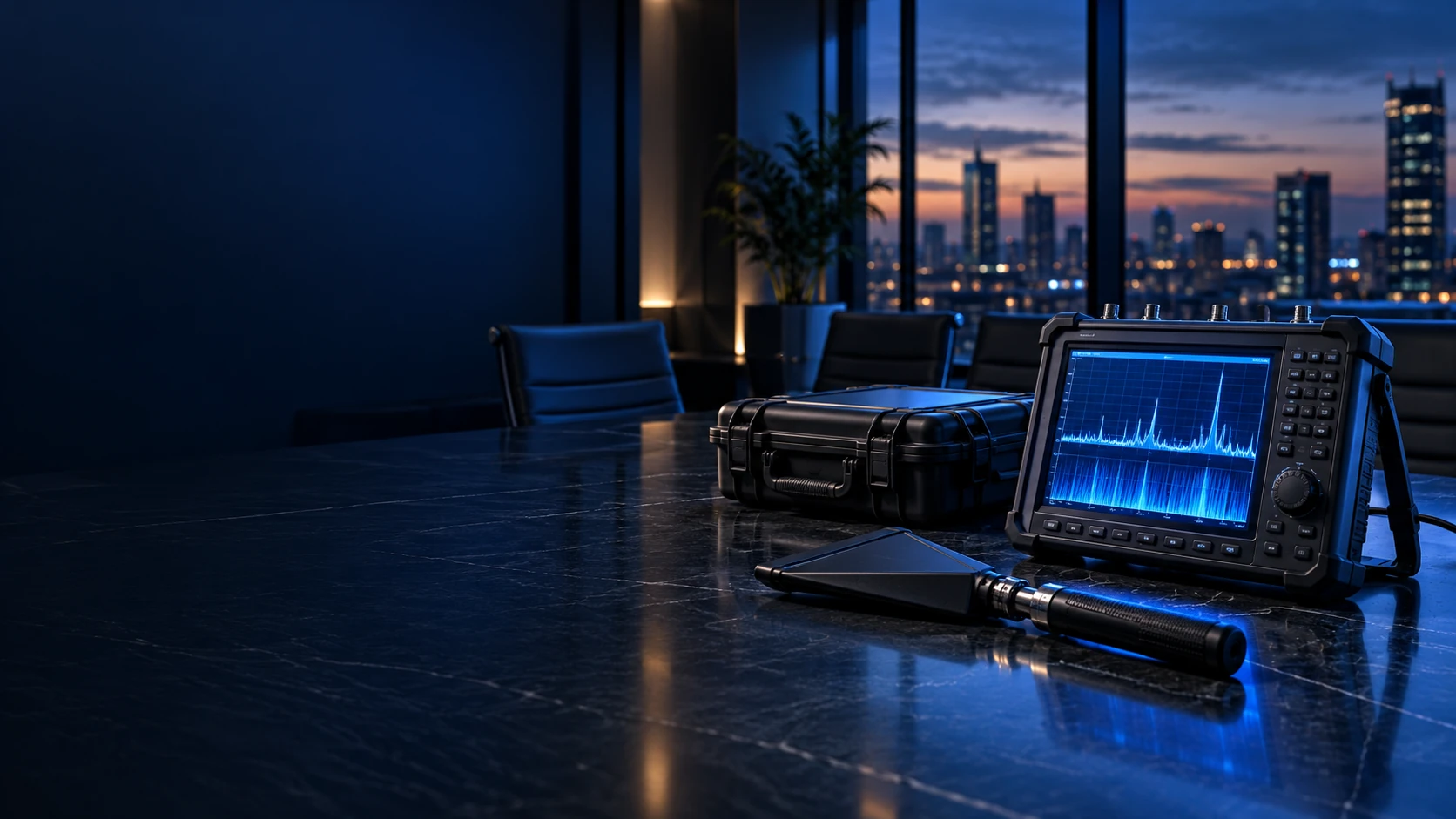
We arrange professional inspections of offices, meeting rooms and vehicles for hidden devices and potential information leaks.
Schedule a routine inspection or request one after changes at your site. We agree on the work according to the circumstances.
Have a meeting room or office checked before discussing a deal, finances, client matters or internal decisions.
Have new premises or a vehicle inspected, or request a check after work has taken place or equipment has been installed.
We review the facts, identify what needs checking and agree on a technical inspection plan.
We look for hidden microphones, cameras, transmitters and other unexpected electronics.
We agree which rooms, furniture, equipment, accessible structures and utility connections to inspect. We take account of the equipment already in use.
We combine physical examination with technical detection methods. If requested, we separately assess ways conversations might be overheard outside the room.
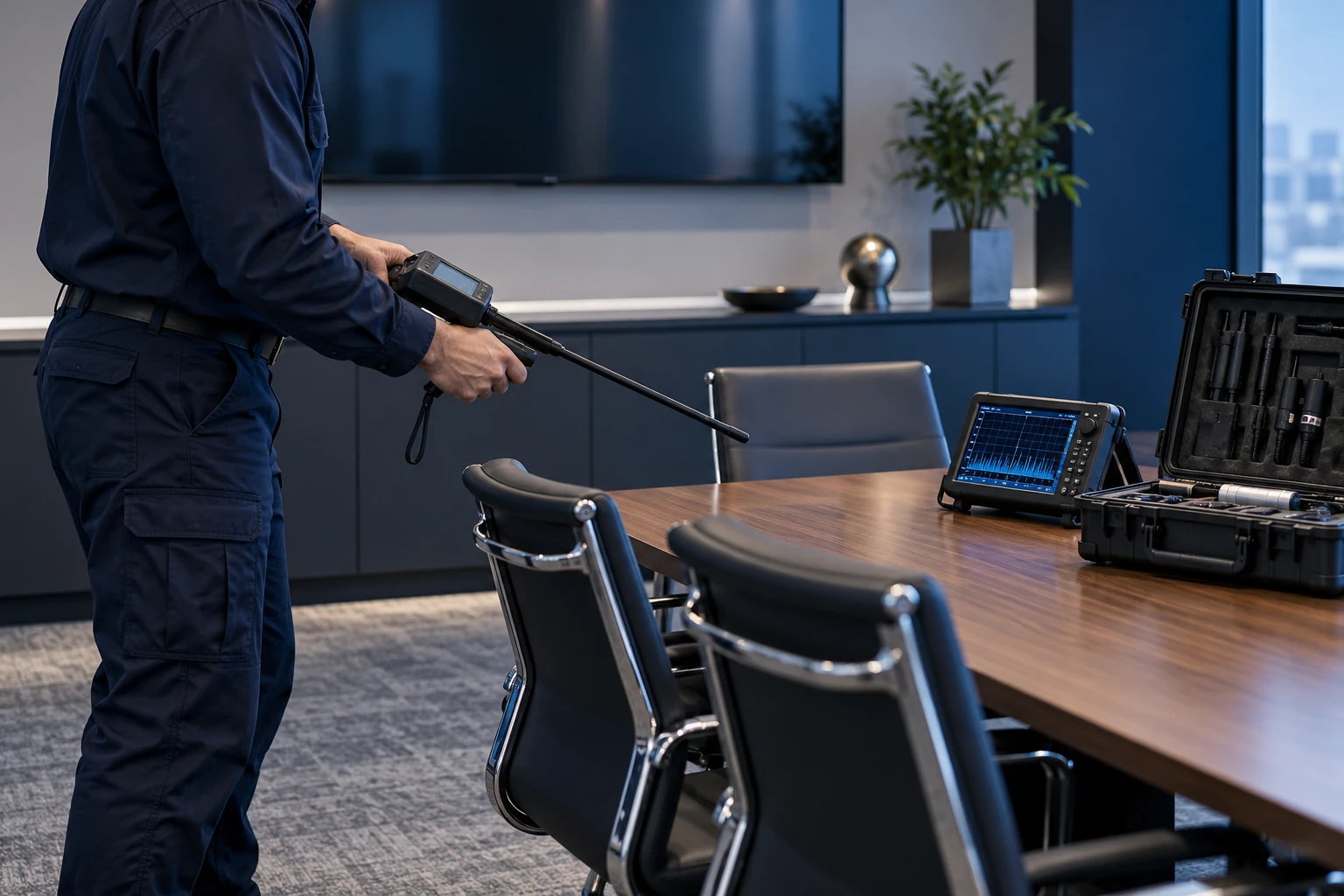
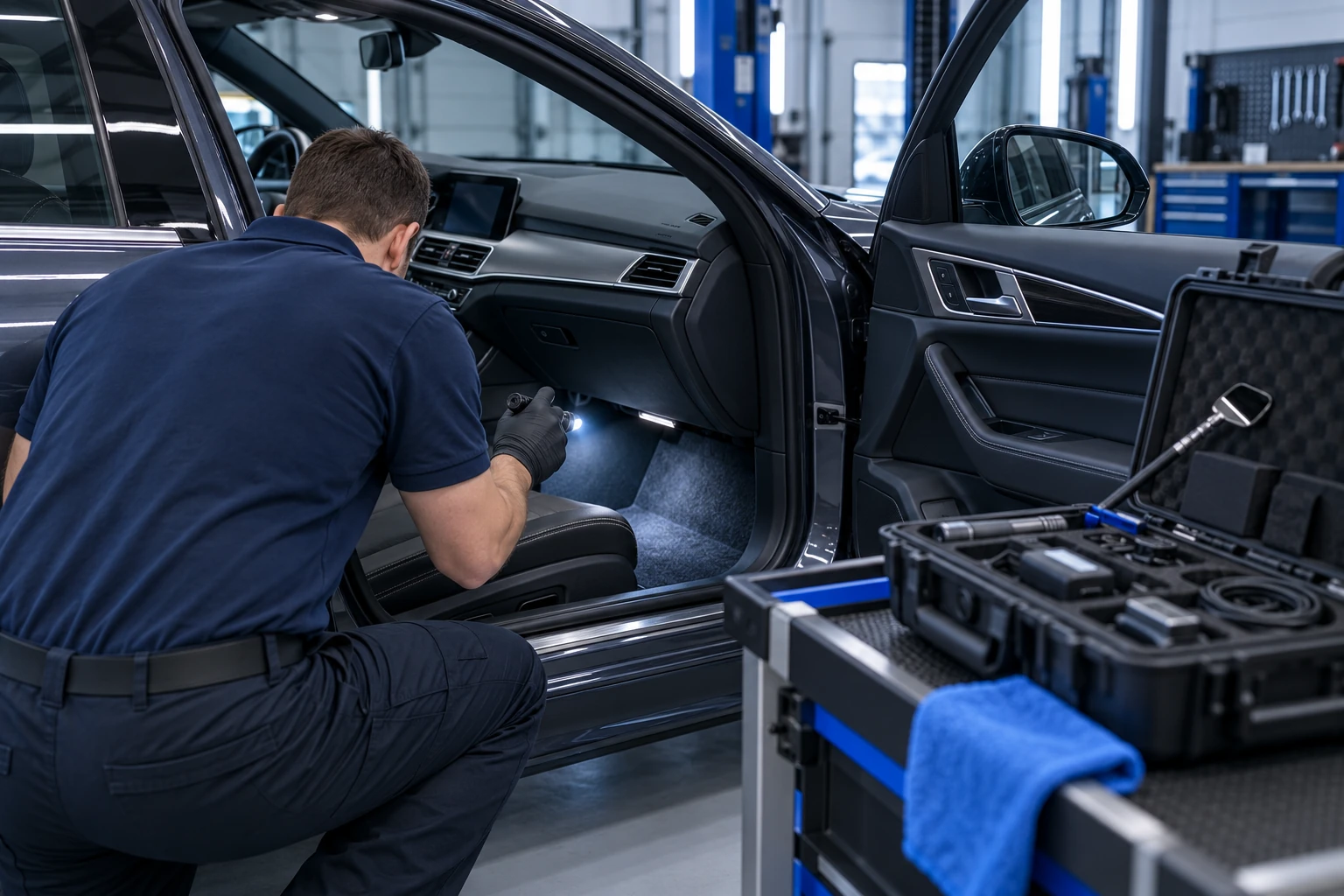
We look for unauthorised recording, transmission and tracking devices.
We inspect the agreed areas and assess any electronics we find against factory equipment and installed accessories.
We combine radio checks with a physical inspection. We discuss any need for additional access or partial disassembly in advance.
The interior and accessible components.
Agreed areas where additional electronics are installed.
Comparison of findings with factory equipment.
We choose methods to suit the site and the agreed scope.
We examine accessible areas, objects and equipment and establish the origin of unfamiliar components or changes.
We examine radio signals and their sources, distinguishing expected equipment from sources that need further investigation.
Where appropriate, we use nonlinear junction detection to find electronic components, including those that are not transmitting.
Visual inspection and, where needed, examination of accessible components with an endoscope or thermal imaging equipment.
For premises, acoustic and vibration risks and accessible utility connections can be assessed as a separate assignment.
We assess the objects we find, document the results and recommend follow-up actions.
Devices that are not transmitting require other detection methods. Our findings reflect the methods used, the areas accessible and the inspection conditions.
We agree on arrangements before visiting the site.
Type of premises and floor area or vehicle model, city, circumstances and desired outcome.
Areas, methods, access, timing and cost.
We systematically examine and test the agreed areas.
We establish the purpose of items found and document the results.
We explain our conclusions and recommendations and outline a protection plan.
After the inspection, you receive a technical report and an explanation of the findings.
The report identifies the site, agreed scope, work performed, observations and limitations.
If we find an unfamiliar device, we explain our initial assessment and agree on next steps. Detailed examination may require a separate assignment.
We agree on the report format, any photographs required and how to share the materials before starting.
We help you choose practical measures for your risks.
Access to the premises, contractor procedures and approval of new devices in confidential areas.
Where needed, we suggest ways to protect conversations against sound and vibration leakage. Design and installation require separate agreement.
We assess whether another inspection is warranted after repairs, maintenance or changes in conditions. A technical site record can be agreed for premises.
We consider the characteristics of the site as well as its size.
For an estimate, tell us the city, site type and size, number of areas and any special requirements for the inspection.
Premises, agreed objects and equipment, and vehicles. We define the scope together based on access, construction and the task.
Radio detection picks up only certain types of activity. A professional inspection may also involve physical examination and other technical methods.
We use additional methods for hidden electronics, including nonlinear junction detection and physical inspection. Detection depends on the device, conditions and access to the relevant areas.
This can be included in the agreed scope. We inspect accessible areas and unfamiliar electronics, taking account of factory systems and accessories. The exact work depends on the vehicle.
We start with agreed accessible areas. If further access or partial disassembly is needed, we agree the conditions and extent with you.
It describes the results under the conditions, in the areas and with the methods used. It cannot guarantee that a device will not be introduced later.
We agree the duration and timing after discussing the site and scope. We take account of access to the premises or vehicle and the impact on your operations.
The inspection covers premises and vehicles. Examination of a phone, computer or account for malware or unauthorised access requires a separate discussion.
Describe the premises or vehicle and the type of inspection you need. We will clarify the scope, arrangements and next steps.