
Specifications and technology / Video surveillance
WDR, BLC and HLC address different lighting problems. A shadowed face against a window, bright headlights, and a sunny yard viewed from a dark entrance may each call for a different setting.
The aim is to preserve detail in the area the camera was installed to cover. A brighter frame alone tells you little. Check a recording with a moving subject.
Why a camera sees the scene differently
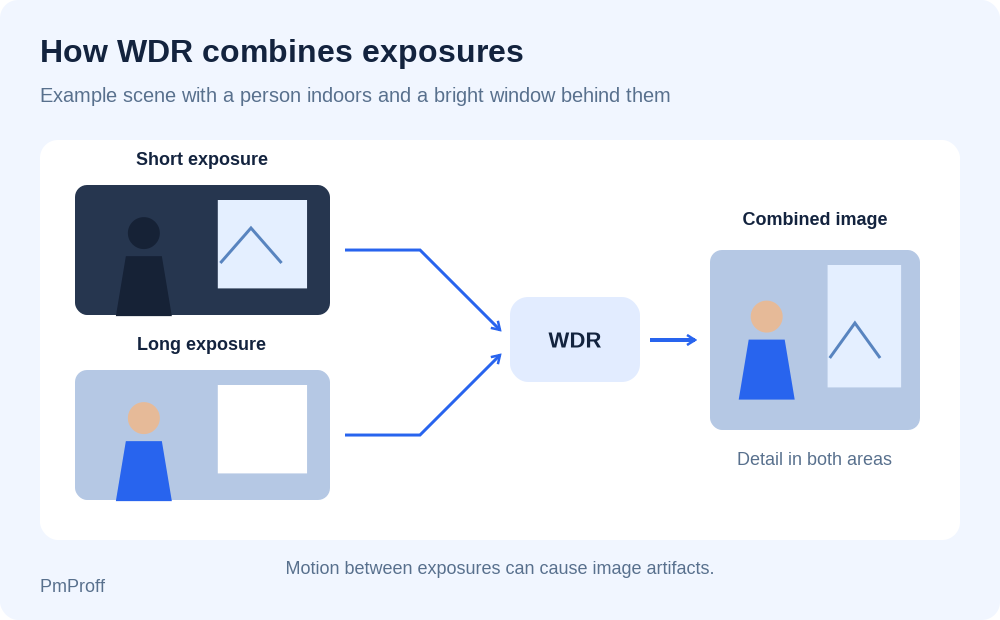
When a scene contains deep shadow and bright light, the sensor may be unable to retain detail in both at once. Set the exposure for the yard and the person indoors may appear dark. Expose for the face and the window may turn completely white.
Consider the entire imaging system as well as the dynamic range figure on the data sheet. Axis explains WDR, its different implementations and the artefacts they can produce.
How WDR, BLC and HLC differ
| Mode | Typical purpose | Limitation |
|---|---|---|
| WDR | Preserve detail in both dark and bright areas | May introduce noise, halos or motion artefacts |
| BLC | Make a subject easier to see against a bright background | Background detail may be lost |
| HLC | Reduce the effect of very bright areas | Does not guarantee a readable number plate |
BLC often lets you select the area the camera gives priority when adjusting exposure. HLC targets intense light sources. Names, adjustment ranges and which modes can be combined depend on the firmware. For an example, see the Backlight Settings section of the TP-Link manual.
Example: someone entering from a sunny street
Decide where the person needs to be recognisable: before the door, in the doorway or after entering. If you need to see the face indoors, test BLC with the target area set there, then try WDR separately. Compare clothing detail and look for double outlines around the moving person.
A setting that looks best in an empty room may perform poorly when someone walks through quickly. Make several passes at different speeds. Save the recordings using the same codec, resolution and frame rate so the comparison is meaningful.
Why maximum WDR is not always best
When an object moves between exposures, combining those exposures can make it harder to reproduce cleanly. Depending on the implementation, you may see blur, double edges or unnatural transitions. Boosting dark areas can also make noise more visible. Test the setting before choosing the maximum.
A shorter exposure can improve motion clarity, provided there is enough light. Changing the camera angle, lighting the entrance or moving the observation area can sometimes help more than heavy processing. For more on lighting and movement, see the guide to night-time camera images.
Can HLC help with vehicle number plates?
HLC can reduce headlight glare. Plate legibility also depends on distance, angle, exposure time, reflections from the plate and its size in the frame. Test number plate recognition in the actual scene. An ordinary overview camera does not necessarily perform like a dedicated plate capture system.
A promotional still is a poor test of identification. Check exported recordings in daylight, at dusk and at night, with real movement in the target area.
What to check on site
- Define the priority area and the detail you need.
- Save the original settings and a reference recording.
- Compare the available modes one at a time.
- Check a moving face or another relevant subject.
- Repeat the test under the most difficult expected lighting.
- Examine both playback and an exported file as well as the live preview.
Frequently asked questions
Are DWDR and WDR always the same?
No. Digital correction of shadows and highlights does not necessarily use multiple exposures. Check how the manufacturer implements it and what it delivers in your scene.
Does a higher dB figure mean a better camera?
A single figure is insufficient. The measurement method, processing, motion artefacts and visibility of the required detail all matter.
Should I leave every mode enabled?
No. Some modes are mutually exclusive. Use the model’s manual and test the settings on recorded footage.
In brief
WDR handles scene contrast, BLC helps reveal a subject against a bright background and HLC reduces the effect of intense lights. Judge the result by the detail visible in real recordings.