
Specifications and technology / Intruder alarms
Opening, shock and tilt are separate events. A combined detector can support several of them, but each function needs its own settings and test. Fitting an opening detector to a window does not give it glass-break detection.
The magnet and sensor work together
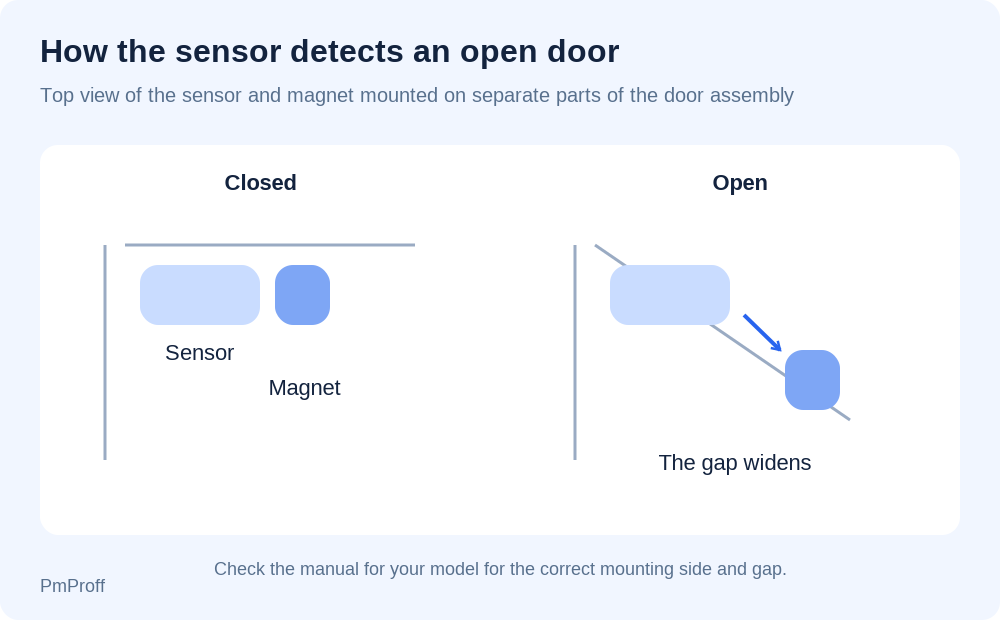
In a magnetic contact detector, the distance and orientation between the two parts matter. When the door or window is closed, the magnet must sit within the specified sensing area and move out of it when opened. The mounting side, permitted gap and effect of a metal surface vary by model. Use the dimensions for your own kit.
Shock and tilt cover different events
On the DoorProtect Plus U Jeweller, a magnetic sensor detects opening, while an accelerometer detects shock and tilt. Motion detection depends on which part of the assembly carries the sensor itself. Test these functions on a tilt-and-turn window before reusing settings from a door.
| Event | What it detects |
|---|---|
| Opening | Change in the magnet’s position relative to the sensor |
| Shock | Mechanical impact that meets the detector’s criteria |
| Tilt | Change in sensor orientation |
| Tamper | Interference with the housing or mounting, if supported |
Why an opening notification may arrive later than expected
When a door or window is opened slightly, the magnet may remain close enough to the sensor for the electrical state to stay the same. Test the actual gap you need to monitor. Open the door or sash slowly and note when the event registers, then repeat at normal speed. Position the two parts so that the required state registers reliably.
Example: monitoring a window left open for ventilation
Suppose you want to detect opening but still allow ventilation. Decide which position is permitted and check whether the system supports that mode. If only one function needs a different rule, avoid disabling the entire detector. Verify behaviour while the alarm is armed as well as checking the indicator.
Checks after installation
Test each event separately. Check the housing and confirm that notifications arrive. Use the manufacturer’s test procedure without striking the device forcefully. Ajax recommends functional tests after installation. Retest the gap after adjusting hinges or changing a seal, since these can change the alignment.
Selection checklist
- Check the permitted mounting side and gap.
- Test every door or sash position you need to monitor.
- Repeat the test after mechanical adjustments.
Frequently asked questions
Can shock detection replace a glass-break detector?
Not automatically. The two methods detect different events and suit different applications.
Can I fit any magnet?
Use a compatible kit and keep the two parts within the positions and distances specified in the instructions.
Why does an open door show as closed?
Check magnet position, confirm opening detection is enabled, verify the status is up to date and check installation against the instructions.
In brief
Each function detects a particular event. Check placement and test opening, shock and tilt separately.